
• Biasin
• Böhm
• Gorkiewicz
• Heinemann
• Heitzer
• Kargl
• Kneidinger
• Kovács
• Kwapiszewska
• Marsh
• Milger
• Sattler
• Singer
• Vesely
Students
Publications

The CRONIC-PPF Faculty
|
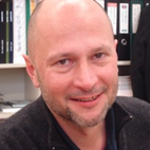
Ákos HEINEMANN
| ||
|
Head of Division of Pharmacology of the Otto Loewi Research Center, Medical University of Graz
Division of Pharmacology, Otto Loewi Research Centre, Medical University of Graz,
Neue Stiftingtalstraße 6, 8010 Graz
WWW: Forschungsportal Med Uni Graz
| |||
Ákos Heinemann is an established immunopharmacologist focusing on the regulation of leukocyte trafficking as a fundamental principle of tissue inflammation, particularly in the lung. He has characterized novel mediators and metabolic pathways that regulate the barrier function of the endothelium and its interaction with immune cells and elucidated their therapeutic potential in various disease models in the lung. Until recently he has been coordinating the doctoral programs MOLMED and was speaker of the FWF-funded doctoral college DK-MOLIN. Currently, his team is investigating the role of metabolic alterations and ER stress in the initiation and maintenance of lung fibrosis.
Project
Succinate and its metabolites alter pro-fibrotic monocyte functions in progressive pulmonary fibrosisCo-PI: Rishi Rajesh
Research interests
- Technical development and clinical implementation of the basophil activation test (BAT) as a novel
diagnostic tool in allergology, particularly in Hymenoptera venom allergies.
(Sturm
et al. , 20095 [↗]; Bokanovicet al. , 2013 [↗]; Sturmet al. , 2004 [↗]) - Characterization of prostaglandin D2, its active metabolites and their receptors
(CRTH2/DP D2 and DP D1) as novel targets in eosinophilic responses in
allergic diseases and non-allergic inflammation. We described several novel small molecule antagonists
of CRTH2 and their efficacy to inhibit eosinophil responses, have shown that that DP D1
receptors are involved in eosinophil survival and migration and that both receptors are important
signaling molecules in macrophages and innate lymphoid cells (ILC2).
(Mathiesen
et al. , 2005 [↗]; Schratlet al. , 2007 [↗]; Sedejet al. , 2012 [↗]; Schmidtet al. , 2013 [↗]; Jandlet al. , 2016 [↗]; Maricet al. , 2019 [↗]) - Protective role of EP4 receptors in lung pathologies. We could delineate the protective
effects of prostaglandin E2 in the lung as a bundle of mechanisms in different cell
types mediated by the G-protein-coupled receptor EP4. Activation of EP4 receptors
attenuates eosinophil recruitment and activation, ILC2 activity, and cytokine secretion, but strengthens
the endothelial barrier. Deposition of collagen, proliferation of myofibroblasts and recruitment of
fibrocytes is likewise reversed by blockade of PGE2 metabolism. We observed corresponding
beneficial effects in mouse models of allergic airway inflammation, acute lung injury and lung fibrosis.
(Bärnthaler
et al. , 2020 [↗]; Maricet al. , 2018 [↗]; Luschnig-Schratlet al. , 2011 [↗]; Jandlet al. , 2016 [↗]; Konyaet al. , 2013 [↗]; Sturmet al. , 2008 [↗])