
• Biasin
• Böhm
• Gorkiewicz
• Heinemann
• Heitzer
• Kargl
• Kneidinger
• Kovács
• Kwapiszewska
• Marsh
• Milger
• Sattler
• Singer
• Vesely
Students
Publications

The CRONIC-PPF Faculty
|
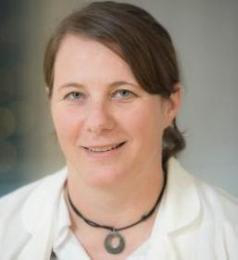
Ellen HEITZER
| ||
|
Full Professor for Liquid Biopsy, Diagnostic and Research Center for Molecular BioMedicine,
Head of the research unit “Liquid biopsies for personalized medicine in cancer”
Diagnostic and Research Institute of Human Genetics, Medical University of Graz,
Neue Stiftingtalstraße 6, 8010 Graz
WWW: Forschungsportal Med Uni Graz
| |||
Ellen Heitzer is an EU-registered Clinical Laboratory Geneticist at the Institute of Human Genetics at the Med Uni Graz, where she heads the Research Unit for “Liquid Biopsies for personalized medicine in cancer”. She is particularly interested in circulating tumor DNA (ctDNA) and cell-free cfDNA and her group has developed and applied a set of techniques for the analysis of ctDNA to non-invasively investigate tumor evolution or use cfDNA as a response marker. As a steering committee member of the European Liquid Biopsy Society (ELBS) she advocates for the standardization and guidelines of Liquid Biopsy approaches to enable their widespread clinical use.
Project
Utilizing Circulating Free DNA (cfDNA) to differentiate idiopathic pulmonary fibrosis (IPF) from other progressive pulmonary fibrosisCo-PI: Vasile Foris
Research interests
- We are specializing in liquid biopsy research, particularly in the analysis of circulating tumor DNA (ctDNA) for personalized cancer medicine. Our work focuses on developing non-invasive methods to detect and monitor cancer through the analysis of ctDNA present in blood plasma. This approach aims to identify tumor-specific genetic alterations, enabling real-time monitoring of tumor dynamics and treatment responses. We have developed various techniques to analyze plasma DNA, including meth-ods to detect genome-wide copy number alterations and specific mutations at low allele frequencies. These advancements facilitate the non-invasive reconstruction of tumor genomes. Moreover, we explore novel strategies to profile plasma DNA, such as inferring nucleosome occupancy patterns from sequencing data. This provides insights into gene activation statuses and enables functional analyses from plasma DNA sequencing.
- More recently, we have been focusing of applying our cfDNA technologies several non-oncological condition such as inflammatory diseases. Expanding cfDNA analyses beyond cancer could revolutionize early disease detection, real-time monitoring, and treatment personalization for a variety of conditions. While significant progress has been made in oncology, further research is needed to refine these approaches for broader clinical applications. As technologies improve, cfDNA-based diagnostics could become a universal tool for precision medicine across multiple medical disciplines.
- Furthermore, we have extensive experience in the administrative work related to submissions to the ethical committee, grant proposals, and grant management and reporting since we have has successfully completed a variety of research projects including OeNB grants, FWF projects and a Christina Doppler Laboratory. We have published many articles in high-ranking peer-reviewed journals, such as Nature Communications, Nature Genetics, and Clinical Chemistry, Clinical Cancer Research and were invited to write reviews and commentaries for Trends in Genetics, Nature Reviews Genetics, Science, or Cancer Cell.